Apple Displays Target BT.2020 Color Standard in Next MacBook Pro and iPad Pro
What You Need to Know
- Apple plans to adopt OLED panels covering 95% of BT.2020 color standard in future MacBooks and iPads.
- BT.2020 color standard offers broader spectrum than current DCI-P3, enabling deeper and more accurate colors.
- Panel makers developing three new OLED pixel designs to improve color accuracy, efficiency, and brightness longevity.
- Display manufacturers reducing dependence on licensed technologies, shifting competitive dynamics in the panel supply market.
The color standard Apple’s displays currently target, DCI-P3, was itself a step up from the sRGB baseline that defined screens for decades. The next step being discussed is considerably larger.
According to a report from research firm TrendForce, Apple plans to adopt OLED panels covering 95% of the BT.2020 color standard across future MacBook Pro, iPad Pro, and iMac models. BT.2020 describes a far broader spectrum than DCI-P3, translating to deeper, more accurate reds, greens, and blues in practice. The shift would represent a meaningful change in how Apple positions display quality, moving the conversation away from brightness and thinness toward color accuracy and power efficiency.
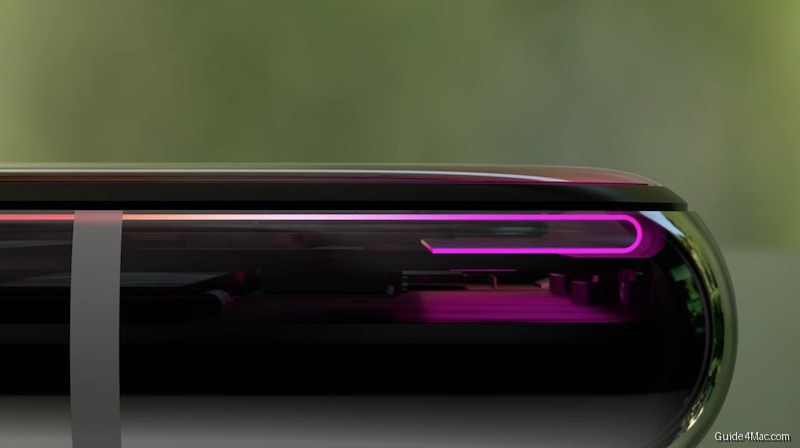
Getting there requires changing the chemistry inside each pixel. Panel makers are moving from simpler light-emitting recipes toward more sophisticated designs that transfer energy between materials more efficiently. TrendForce outlines three approaches being developed:
- A design that produces a purer, more precise color output to meet BT.2020 targets
- A structure that adds a helper material to convert energy into light more efficiently
- A formulation that mixes in extra materials to sustain brightness over the panel’s lifespan
The competitive dynamic is shifting as a result. Display manufacturers that can offer the best combination of cost, manufacturing ease, and freedom from patent licensing stand to gain the most. The report frames this as a chance for panel makers to reduce dependence on licensed technologies, which changes the relationship between manufacturers and their material suppliers. Apple’s iPhone 18 Pro models are already expected to draw panels from competing suppliers, and the same supplier competition is likely to intensify around these higher-specification panels.
MacBook Pro Timeline
Apple brought OLED to the iPad Pro in 2024, with MacBook Pro expected to follow between 2026 and early 2027. That window creates some tension around the rumored high-end MacBook Ultra, which has been floated as an OLED candidate on its own longer timeline. The gradual rollout across MacBook Pro, iPad Pro, and iMac suggests Apple is treating BT.2020 as a platform-wide upgrade rather than a single product moment.



0 Comments