MacBook Pro M6 Is Just a Placeholder Before 2027 Redesign
What You Need to Know
- M6 MacBook Pro ships late 2026 with current design, serves as placeholder before M7.
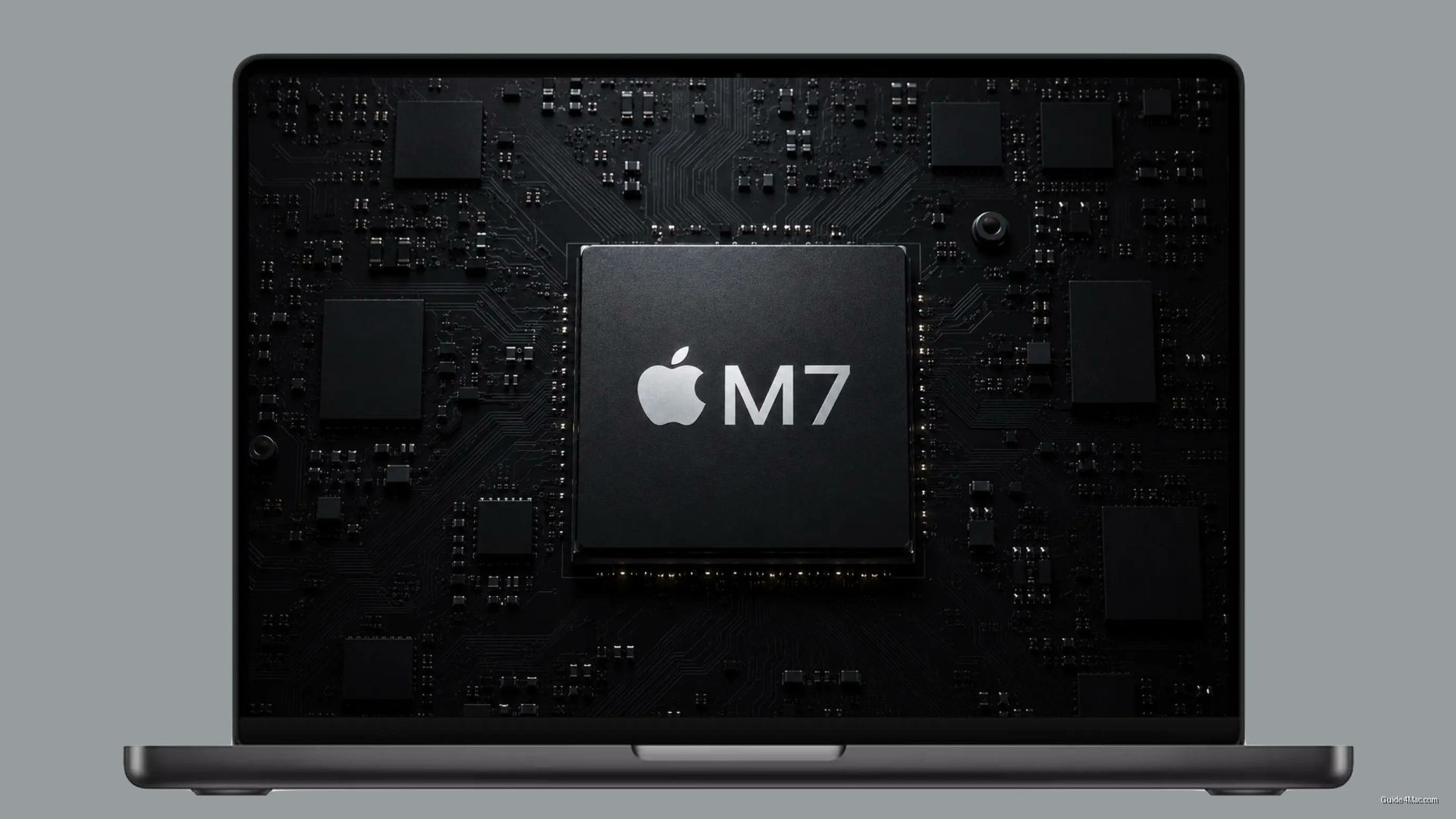
- M7 MacBook Pro arrives first half 2027 with new design and OLED display.
- M7 includes AI improvements for heavier workloads, aligning with Apple’s AI strategy.
- Apple skipping M6 Pro and M6 Max variants to compress chip cycle deliberately.
Apple’s plan for the 14-inch MacBook Pro over the next 18 months is less about the M6 and more about using it as a placeholder. Bloomberg reports that Apple has already finished work on an M6 MacBook Pro that keeps the current design intact, ships in late 2026, and then steps aside relatively quickly for something more substantial.
That something is the M7 MacBook Pro, planned for the first half of 2027 with a new design tied to Apple’s higher-end models featuring OLED displays and touchscreens. The entry-level version is expected to follow a similar design direction, meaning the slimmer body reported for premium configurations would filter down. Apple is compressing the usual chip cycle deliberately: there will be no M6 Pro or M6 Max variants, keeping the M6 generation shorter than past cycles.
Why M7 Is the Real Target
The reasoning is straightforward. Apple wants the M7 in place because it includes improvements built for heavier AI workloads, which aligns with where the company is pushing its Mac lineup. Given Apple’s AI roadmap delays in other areas, the urgency around M7’s on-device capabilities carries some weight.
The 2027 MacBook Pro redesign sits inside a crowded product calendar that also includes new iPad Pro models, iPhone 18, an iPhone Air 2, a foldable iPhone, smart glasses, and new smart home devices. That kind of volume puts pressure on supply chains that are already strained. Memory chip shortages and rising component costs have already affected Apple’s schedules, and both the late 2026 and early 2027 dates remain subject to change.
The M6-to-M7 transition is an unusual public acknowledgment of a short-cycle chip strategy, even if Apple would never frame it that way. Buyers considering the base 14-inch MacBook Pro in 2026 will essentially be choosing between a faster version of what exists now and waiting roughly six months for a redesigned machine built around a chip Apple considers more future-ready.



0 Comments