Snap Specs Arrive With 4-Hour Battery, Years Before Apple’s AR Glasses
What You Need to Know
- Snap’s new Specs AR glasses cost $2,195 and launch fall 2026 in US, UK, France.
- Specs deliver four-hour battery life with mixed use, extending to 20 hours with charging case.
- Dual Snapdragon chips power high-resolution cameras, stereo display, and hand tracking in under 140 grams.
- Lens Studio integrates Claude, OpenAI, and Gemini APIs, positioning Specs as platform rather than gadget.
Snap’s AR glasses arrive at a moment when the category has more hype than hardware. The company’s new Specs, unveiled by CEO Evan Spiegel at AWE USA 2026, are a consumer-grade wearable computer that can actually be pre-ordered today, priced at $2,195 with a refundable $200 deposit, launching later this fall in the U.S., UK, and France.
The more telling detail is how far Snap has pushed the hardware compared to its own previous attempts. Earlier developer-only Spectacles managed 45 minutes of battery life. Specs run up to four hours with mixed use, come with a charging case that extends that to 20 hours total, and include a magnetic cable that charges the glasses while they’re still on your face.
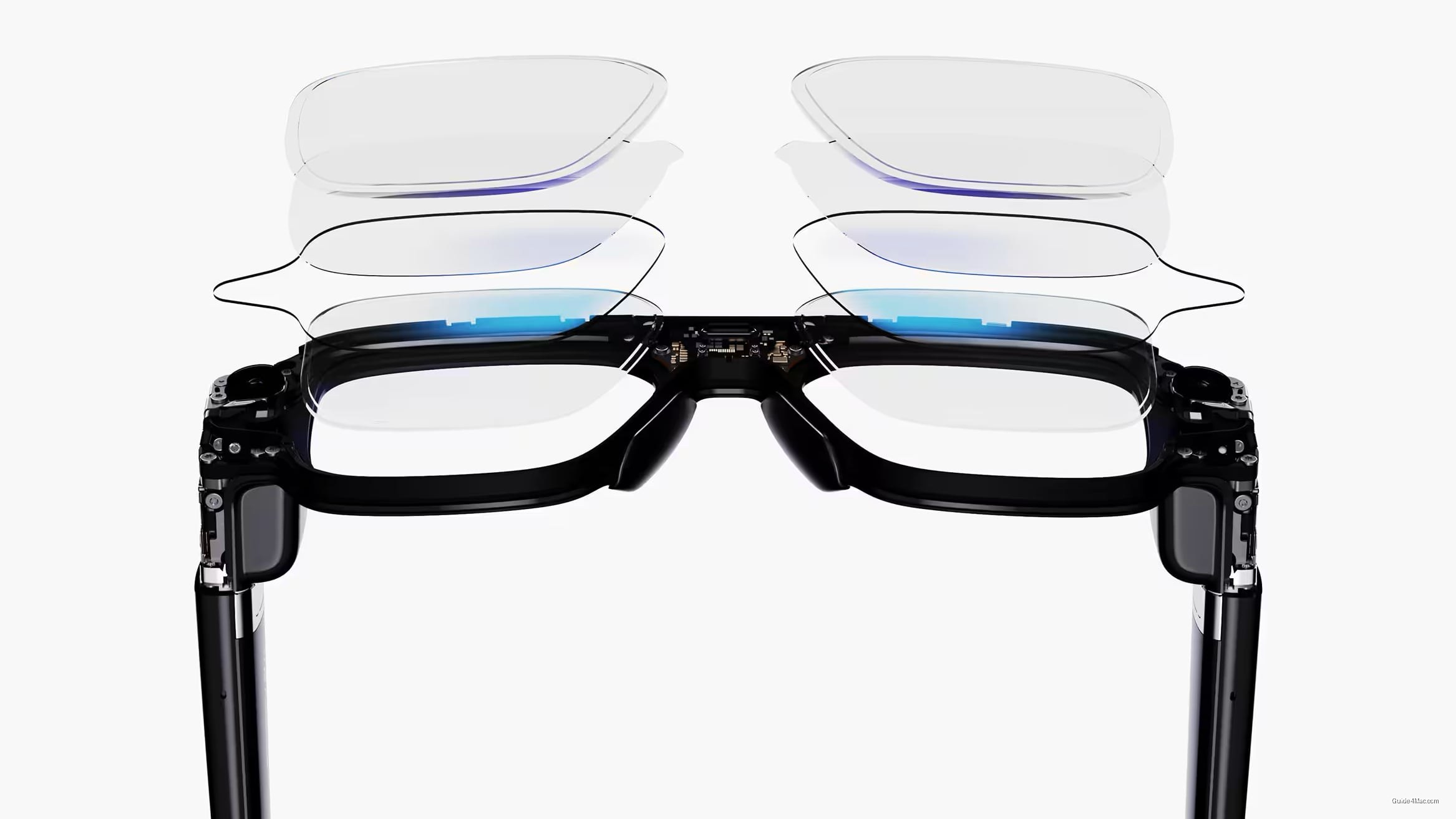
The specs themselves are dense for something weighing under 140 grams:
- Two full-color high-resolution cameras and two infrared computer vision cameras
- A 51-degree field of view stereo waveguide display using LCoS projectors, with automatic tinting
- Two Snapdragon chips (one handling the lenses, one handling computer vision)
- Hand tracking, a microphone array, stereo speakers, and 6-axis IMUs
What the software layer actually means
Because Specs run lenses built for Snapchat, Snap arrives with an existing developer ecosystem rather than an empty platform. Lens Studio is adding agentic development tools alongside integrations for Claude Code, Codex, and Cursor, and lenses can call OpenAI and Gemini APIs directly. That positions Specs closer to a platform than a gadget, similar to how real-time visual intelligence in Apple’s ecosystem has become a selling point for ambient computing rather than a standalone feature.
Apple’s own AR glasses with a built-in display are still years out, with its first glasses, limited to AI features and no display, not expected until late 2027. Snap is shipping hardware that competes with nothing from Apple today, which is either a clean runway or a reminder that the market has not yet proven itself.


0 Comments