Apple Devices Tracked at Traffic Intersections Without Warrant
What You Need to Know
- Leonardo US markets SignalTrace, which pairs license plate readers with Bluetooth and Wi-Fi sensors to fingerprint devices in vehicles.
- System logs unique hardware identifiers from Apple devices, AirTags, and AirPods to build movement profiles across multiple intersections.
- Law enforcement can collect and retain SignalTrace data without warrants because signals broadcast in public space lack legal protection.
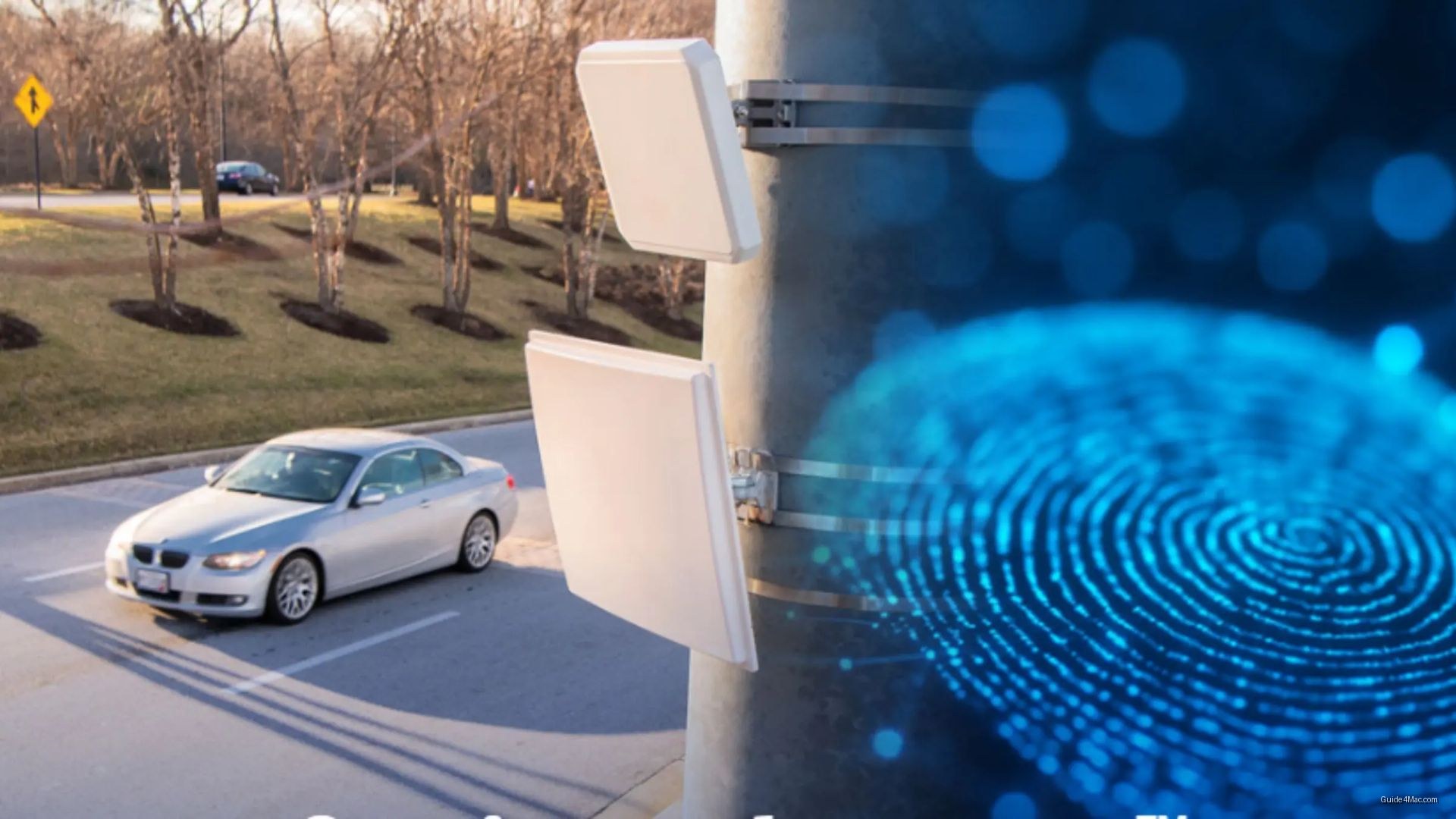
A defense contractor called Leonardo US Cyber and Security Solutions is marketing a surveillance system that pairs automatic license plate readers with sensors designed to capture Bluetooth and Wi-Fi signals from nearby devices. The product, called SignalTrace, does not replace existing camera infrastructure. It adds onto it, turning a standard plate reader into something that can also fingerprint the electronics inside your car.
The mechanics are straightforward. As a vehicle passes an equipped intersection, the system logs the unique hardware identifiers broadcast by any nearby Apple devices. Your Apple Watch pinging the system as you drive through is not a hypothetical edge case, it is an explicitly named capability. Leonardo says the software collects only these frequency identifiers, not message content or personal files, though the distinction matters less than it sounds when the goal is building a movement profile.
That profile is the point. Over repeated captures, algorithms can map travel patterns and identify which devices consistently appear alongside which vehicles. A set of AirPods logged next to the same license plate across multiple intersections becomes, in the system’s logic, an association worth storing. An AirTag in a gym bag in the trunk is enough to generate a trackable signal.
The warrant gap that makes this attractive to agencies
Law enforcement and border security are the primary customers Leonardo is targeting. Because the system collects signals broadcast in public space, no warrant is currently required to gather or retain the data. That legal gap is not new to digital surveillance, but the scale SignalTrace enables is.
Civil liberties groups are pointing to a secondary risk: a private contractor holding a database of millions of people’s daily movements is itself a target. A breach would expose not just where someone drove once, but the full shape of their routine, along with a map of who they tend to travel with. The hardware is evolving faster than the legal frameworks designed to govern it.



0 Comments