Liquid Glass Gets Transparency Slider After Mixed User Feedback
What You Need to Know
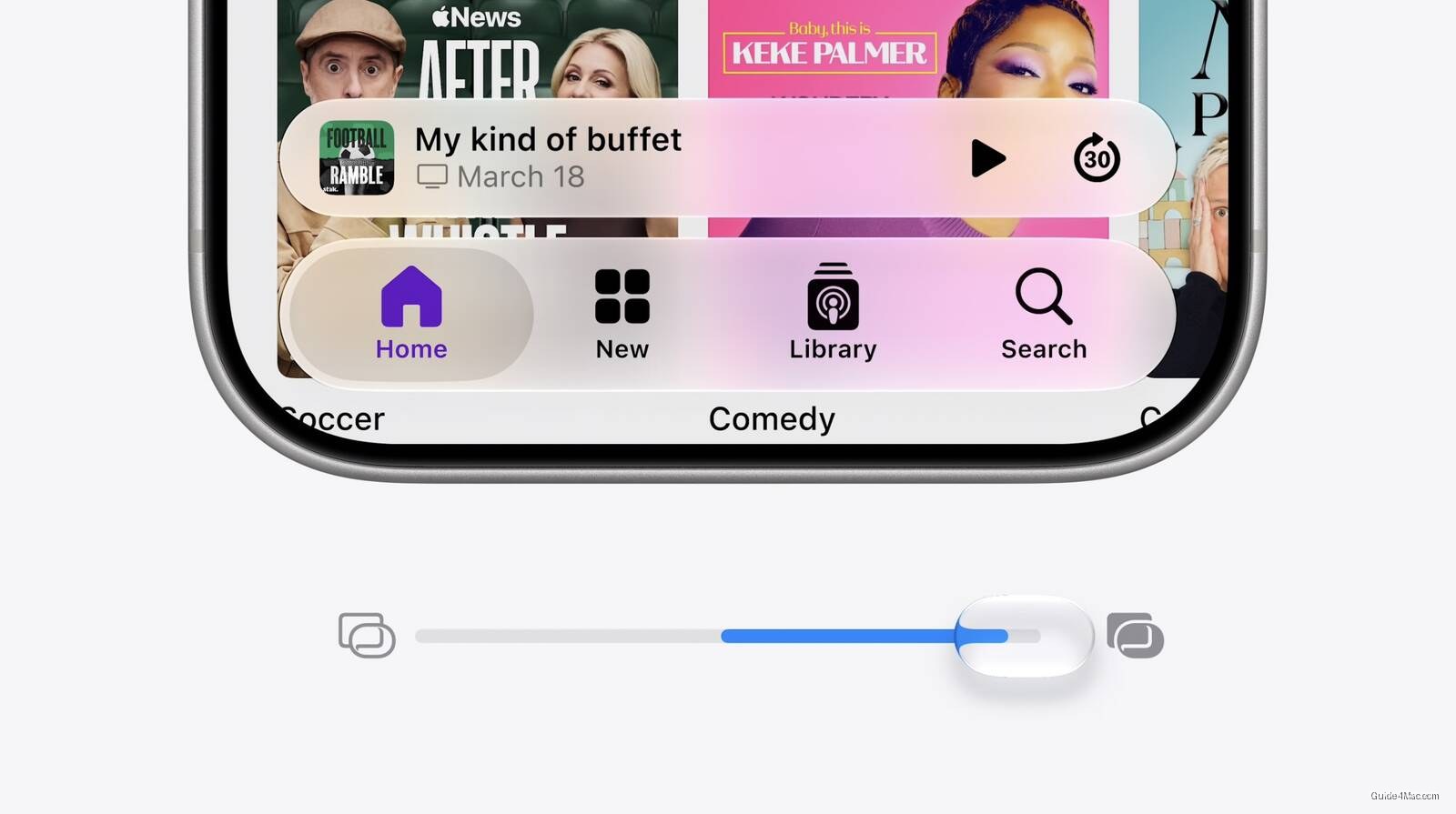
- Apple added transparency slider to Liquid Glass less than one year after initial release.
- Refraction effects now extend to window edges, eliminating visible seams in sidebar design.
- Colored icons return to Liquid Glass after original monochrome implementation drew criticism.
- Apple deepened glass elements in first-party app icons, expanding Liquid Glass visual treatment.
Apple is walking back parts of Liquid Glass less than a year after shipping it, which is a faster course correction than the company typically admits to in public.
The headline feature is a transparency slider letting users dial between fully opaque and completely clear, which effectively acknowledges that the default setting pleased neither power users nor accessibility-minded ones. Apple framing this as acting on feedback it “deeply appreciates” is the company’s standard way of describing complaints loud enough to require a response.
The sidebar changes are more technically interesting than the slider. Previously, refraction effects cut off at the sidebar boundary, creating a visible seam that looked unfinished. The new behavior extends those effects to the full window edge, and colored icons return after the original implementation stripped them to monochrome, a choice that drew immediate criticism when Liquid Glass debuted.
Icon Design Gets Deeper Glass Treatment
Apple is also pushing Liquid Glass further into its first-party app icons, adding layered glass elements directly into the artwork itself. This runs counter to the corrective tone of the other announcements: most of these changes pull back on Liquid Glass’s visual aggression, while the icon update doubles down on it.
The timing lands at WWDC 2026, meaning Apple spent roughly one full development cycle absorbing the reaction before shipping fixes. For comparison, the controversial iOS 7 redesign in 2013 took several point releases to address legibility complaints, and some of those issues persisted for years. A transparency control arriving this quickly suggests the feedback was unusually direct.
What Apple has not addressed, at least in this announcement, is whether the performance overhead of real-time refraction calculations changes with the opacity setting. A fully opaque mode that still runs the same compositing pipeline would be an odd trade-off, and that detail will matter to users on older hardware.


0 Comments