Safari’s Notify Me Alerts You When Webpages Change
What You Need to Know
- Safari’s “Notify Me” feature monitors webpages and alerts users when content changes without third-party extensions.
- Apple’s natural-language extension builder lets users describe webpage changes to automatically generate custom extensions.
- Safari tab grouping uses on-device AI to organize open tabs by topic automatically.
- Apple historically absorbs popular extension categories into the OS, then restricts competing third-party tools.
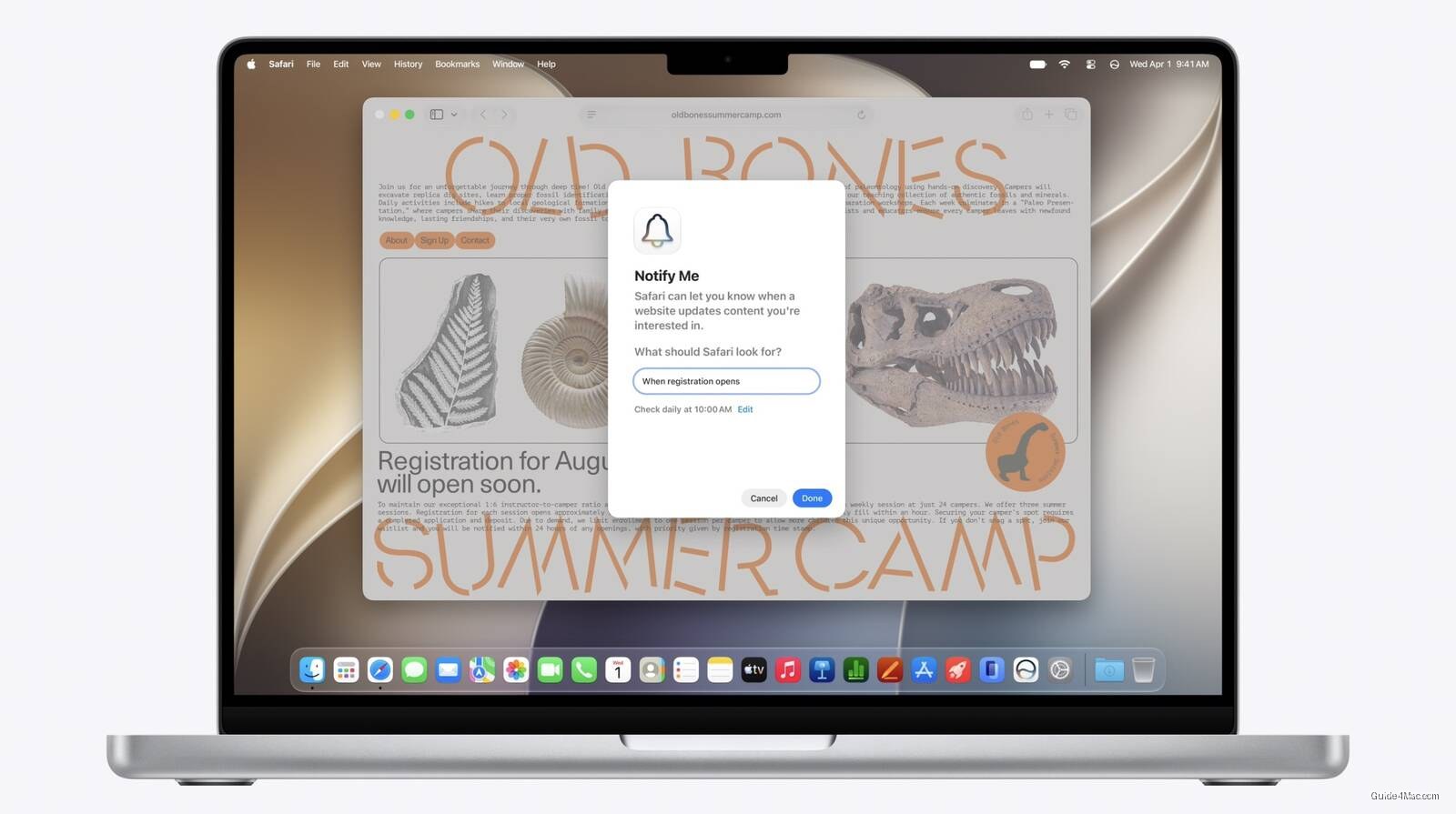
The least-discussed Safari feature arriving from WWDC 2026 is also the most practically useful: a native webpage monitor that alerts you when content changes, no third-party extension required.
Apple is calling it “Notify Me.” Point Safari at a product page, a ticketing site, or any URL where something is likely to change, and the browser will poll it in the background and send a notification when it detects an update. This is functionality that browser extensions like Distill and Visualping have offered for years, which means Apple is once again absorbing a niche tool category directly into the OS.
The tab organization feature follows a familiar pattern. Safari will use on-device AI to group open tabs by topic automatically, which sounds useful until you remember that Chrome has offered tab grouping since 2020 and most people ignore it within a week.
The more unusual addition is the natural-language extension builder. Describe a change you want made to a webpage, and Safari generates a custom extension to do it. The implications here are broader than the stock-check use case Apple is presumably demoing:
- Ad layout suppression on specific sites
- Reflow of paywalled article formatting
- Custom font or contrast adjustments per domain
What this means for the extension ecosystem
Third-party browser extension developers serving Safari on Mac and iOS should pay attention to the Notify Me feature specifically. Apple has a track record of building native versions of popular extension categories and then tightening App Store review standards around redundant third-party tools. Whether that follows here is speculative, but the pattern is established.
Safari’s market share on mobile sits around 25 percent globally, almost entirely because it is the default on iPhone. Features like Notify Me give users a concrete reason to stay rather than just a default they never changed.



0 Comments