IOS 27 Weather App Adds Tap-Through Views for Precipitation and Wind Data
What You Need to Know
- IOS 27 Weather app reorganizes existing precipitation and wind data into tap-accessible views instead of buried scrolling sections.
- Apple acquired Dark Sky in 2020 and integrated its forecast engine into the Weather app’s hourly and 10-day forecasts.
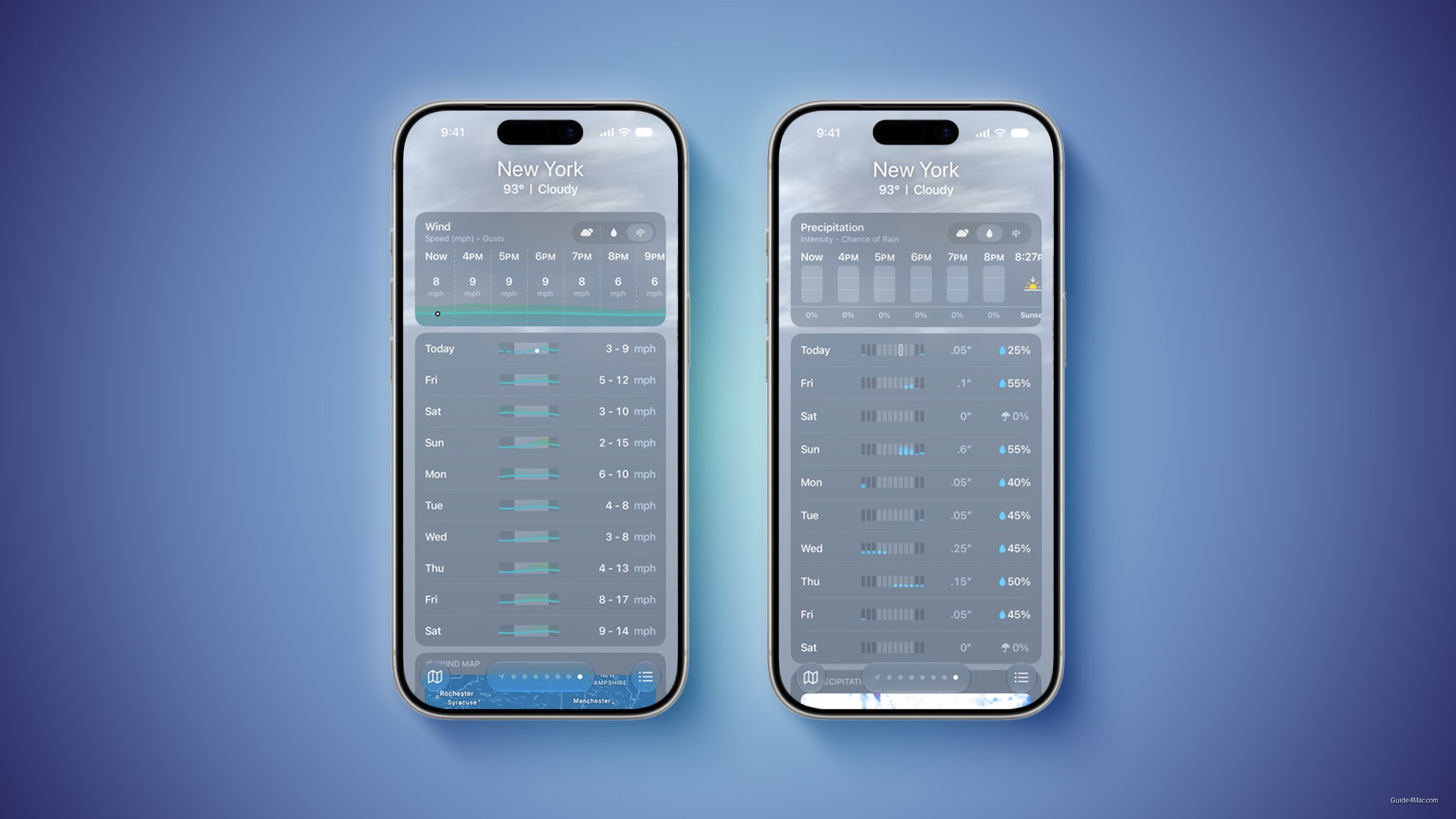
- New interface lets users switch between conditions overview, precipitation percentages, and wind speed views with visual charts.
- IOS 27 releases in September; underlying forecast data sources and accuracy remain unchanged from previous versions.
The actual change in iOS 27’s Weather app is navigational, not informational: precipitation and wind data that already existed in the app is now reachable through a tap-between-conditions interface rather than buried in scrolling detail views. That distinction matters more than it sounds.
Apple’s Weather app has carried hourly and 10-day forecast data since the company acquired Dark Sky in 2020 and folded its engine into iOS 16’s rebuilt app. The complaint since then has been less about what data is available and more about how many taps it takes to compare conditions side by side. This update appears to directly address that friction.
The new interface lets users switch between three views:
- Conditions overview (the existing default)
- Precipitation: hourly and daily percentage chance of rain or snow
- Wind: estimated speeds by hour and day, with accompanying visuals
Each view is paired with visual representations, which suggests Apple is borrowing a design pattern closer to third-party apps like Carrot or Weather Underground, where glanceable charts have been standard for years.
What This Doesn’t Change
The underlying forecast data still comes from the same sources, so accuracy is unchanged. What shifts is discoverability, and for a weather app used by millions of people who never leave the default iOS option, interface access is a real difference in daily utility.
iOS 27 is in beta and scheduled for a September release alongside new iPhone hardware. Apple typically holds weather-adjacent feature announcements close to fall, when precipitation forecasting becomes more relevant across more markets. The timing is consistent with that pattern, even if the feature itself is modest.



0 Comments