IOS 27 Now Asks Permission Before Routing AI Requests to Google Cloud
What You Need to Know
- Apple now requires user consent before routing certain AI features through Google Cloud servers in iOS 26 and 27.
- Shape generation in iWork and Freeform already use Google Cloud processing in current shipping software versions.
- Apple maintains Private Cloud Compute protections including isolated processes and confidential virtual machines for Google-routed requests.
- New permission prompts disclose cloud provider changes that weren’t clearly communicated when Private Cloud Compute launched in 2024.
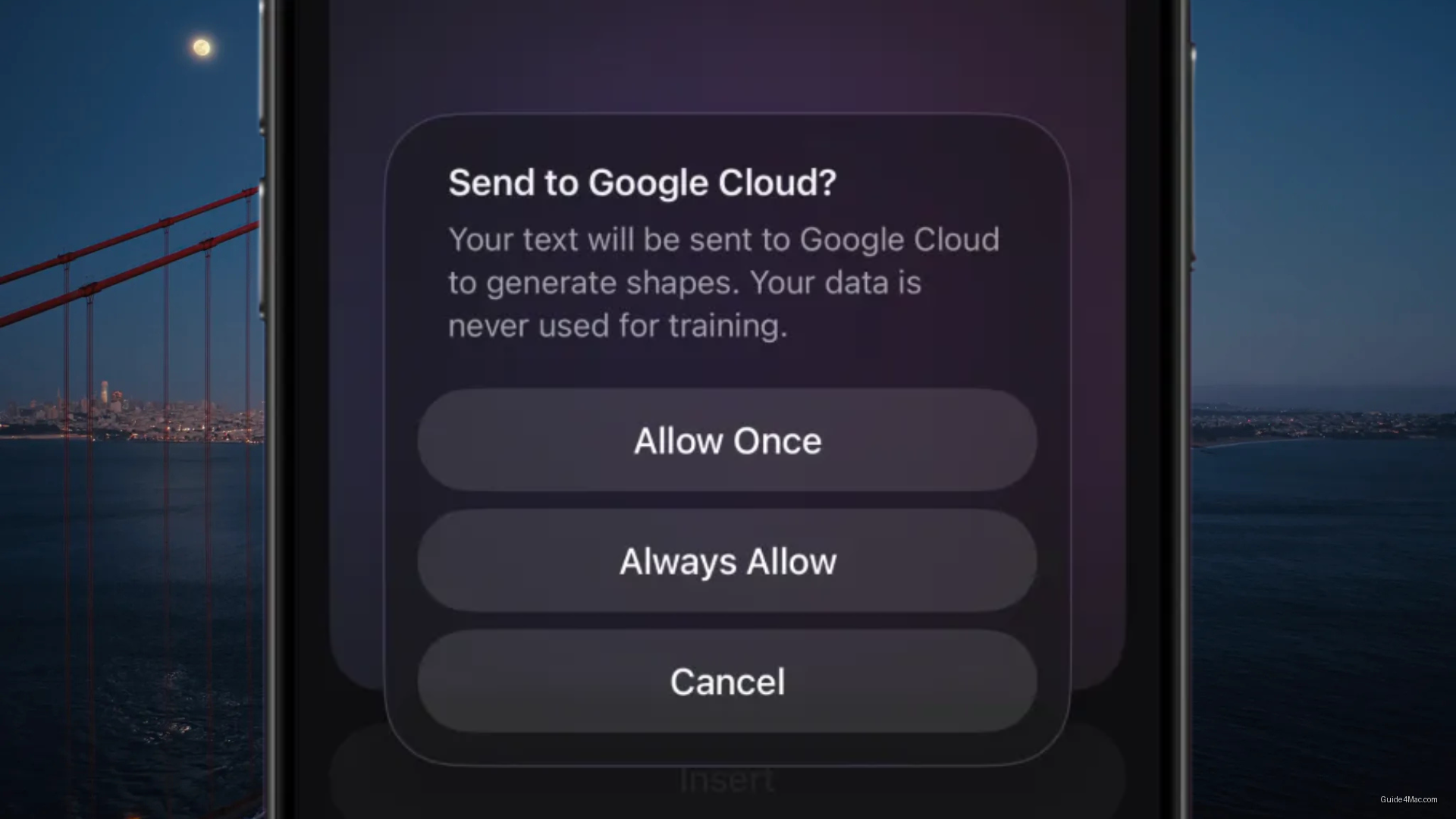
Apple is surfacing a new permission prompt in iOS 26 and iOS 27 that tells users when certain AI features will route their request through Google Cloud servers, asking for consent before proceeding. The prompt appears in tools like shape generation in iWork and similar features in Freeform, which means the Google Cloud pipeline is already active in shipping software, not just a future plan.
When Apple launched Private Cloud Compute alongside Apple Intelligence in 2024, the pitch centered on Apple-owned servers and isolated processing. The trust argument was straightforward: your AI requests go to Apple’s infrastructure, not a third-party cloud. That framing is now more complicated.
Apple says the new arrangement still uses Private Cloud Compute protections, including isolated processes, short-lived inference software, and protected keys inside confidential virtual machines. The models running on Google’s infrastructure were built in collaboration with Google, which explains why Apple-owned hardware was never going to be the processing destination for these particular features.
What this means for users
The practical shift is about disclosure rather than architecture. Apple now shows a popup before any affected request leaves for Google Cloud, giving users a clear decision point. For people who took Apple’s earlier privacy framing at face value, that popup will be the first indication that the cloud provider has changed.
Not every Apple Intelligence feature routes through Google Cloud. The prompt applies to specific new AI tools that require this additional processing capacity, and Apple continues to describe the overall system as privacy-focused. The question is whether the protections travel cleanly from Apple’s own servers to Google’s environment, and Apple’s answer so far is that confidential virtual machines handle that gap.
Hardware eligibility adds another layer. The expanded AI capabilities tied to newer iPhones suggest the Google Cloud features are being designed around devices with more headroom, making this a concern mostly for users already on the latest hardware.



0 Comments