Mac M6 Chips Skipped Entirely as Apple Rushes M7 for AI
What You Need to Know
- Apple skipping M6 Pro and M6 Max chips entirely, moving directly to M7 generation.
- M7 neural-processing upgrades significant enough to accelerate development over building full M6 family.
- M7 Ultra chip designed to power Apple Intelligence cloud servers starting 2029, not just Macs.
- Apple breaking consistent product cadence maintained since M1 chip launch in 2020.
Apple’s AI ambitions are quietly rewriting the Mac’s chip calendar in a way that will leave entire product lines without the upgraded silicon users have come to expect on a predictable two-year cycle.
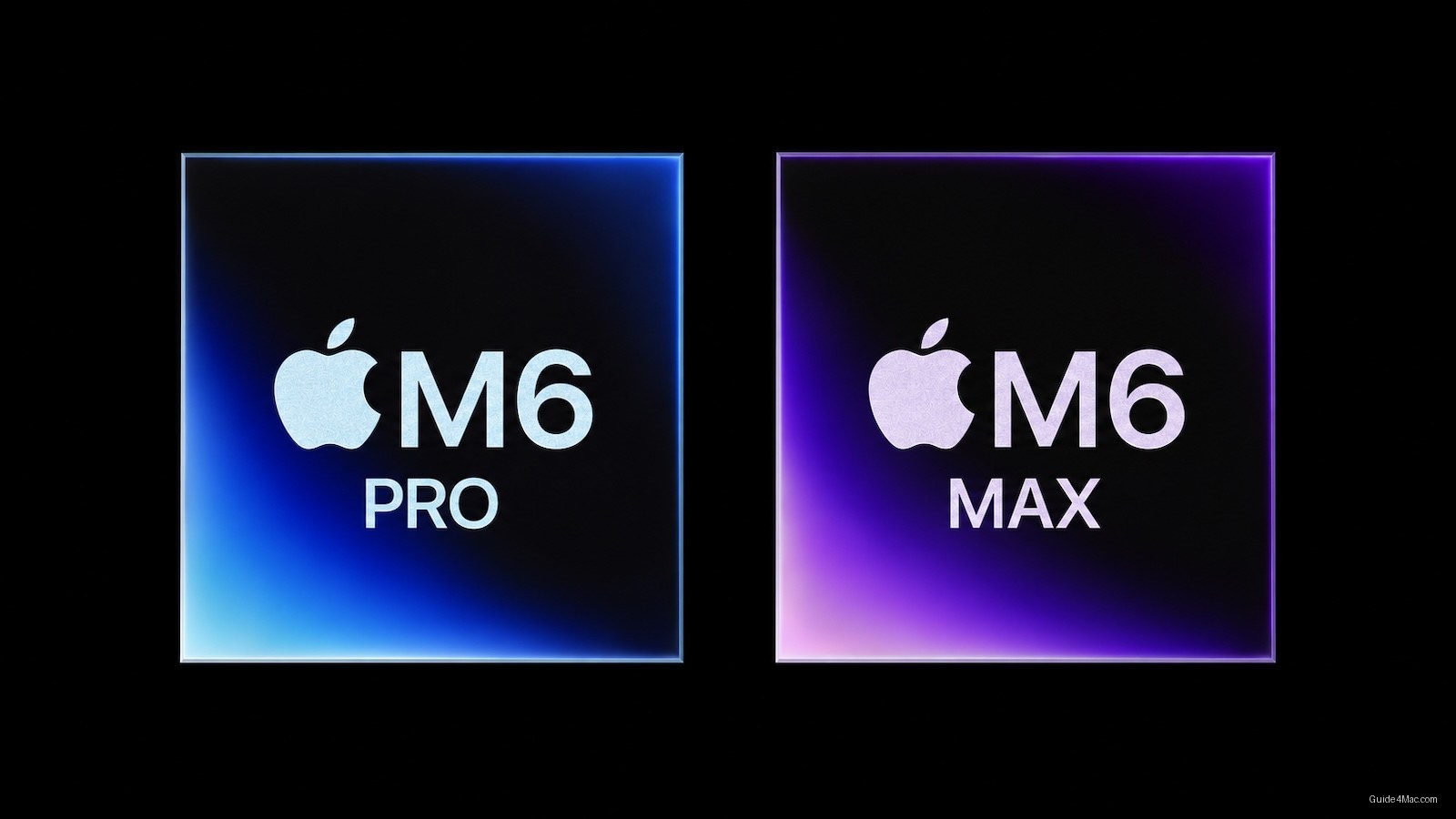
According to Bloomberg’s Mark Gurman, Apple has decided to skip the M6 Pro and M6 Max chips entirely. A base M6 chip will arrive in a new 14-inch MacBook Pro later this year, and then Apple moves straight to the M7 generation, with no M6 Ultra either. The reason, per Gurman, is that neural-processing upgrades planned for M7 were significant enough that Apple chose to accelerate that generation rather than build out a full M6 family first.
The Chip Apple Is Betting Its AI Future On
Gurman’s reported roadmap places the M7 Pro and M7 Max in late 2027, with an M7 Ultra arriving in 2028. That Ultra chip, he says, “dramatically upgrades AI performance” and may eventually power Apple Intelligence servers starting in 2029. The implication is that Apple is not just designing chips for the Mac anymore. It is designing chips for its cloud inference infrastructure, and the Mac lineup is being scheduled around that priority.
The M7 Ultra’s potential server role is a meaningful departure from how Apple has historically positioned its silicon. The M-series line began in 2020 as a way to bring iPhone-class efficiency to the Mac, and each subsequent generation followed a reliable cadence: base chip, then Pro and Max variants roughly six months later, then Ultra. That pattern has held across M1 through M5. Skipping two tiers of a generation, as Apple is now doing with M6, breaks the most consistent product rhythm Apple has maintained since the transition away from Intel.
The M5 Pro and M5 Max launched in March inside updated MacBook Pro models, and Gurman still expects an M5 Ultra to appear in the Mac Studio as early as this year. That means the Mac Studio, which has historically carried the Ultra chip, is likely to be the last machine to complete a full generational cycle before the M6 gap takes effect.
What Gets Left Without a Chip Upgrade
The absence of M6 Pro and M6 Max chips creates a real question about which Macs get updated and when. The higher-end 14-inch and 16-inch MacBook Pro models, the Mac Studio, and the Mac Pro have all relied on Pro, Max, or Ultra chips. Without M6 variants of those, those machines either wait until M7 Pro and M7 Max arrive in late 2027 or receive no meaningful update for an unusually long stretch.
There is also an open question about the iPad Pro. Apple has shipped iPad Pro models with M-series chips on a less predictable schedule, and the next iPad Pro could land anywhere in the M6-to-M7 window depending on how Apple’s 2027 silicon plans develop. A base M6 in a tablet is a less awkward fit than the absence of Pro and Max chips in a MacBook Pro lineup.
The OLED MacBook Pro, widely expected to carry M5 Pro and M5 Max chips, now looks like a deliberate bridge product, giving the high-end MacBook line something to sell while the M6 tier is effectively hollow and M7 Pro takes shape. Apple’s chip strategy is increasingly being shaped by forces, AI roadmaps, server infrastructure, and on-device inference, that have nothing to do with whether a MacBook Pro user needs a faster GPU.
What Mac Buyers Should Actually Do With This
If you are considering a high-end MacBook Pro, Mac Studio, or Mac Pro, the practical read is that M5 Pro and M5 Max represent the current ceiling for at least another 18 months, possibly longer. Waiting for an M6 Pro that will not exist is not a strategy. Waiting for M7 Pro means waiting until late 2027 at the earliest.
For buyers looking at the base 14-inch MacBook Pro, the situation is more straightforward. An M6 model is reportedly coming later this year, and Apple’s chip improvements at the base tier have historically been substantial enough to reward patience of a few months. The rest of the lineup requires a longer view, and the AI-driven reshuffling of Apple’s silicon calendar means that view keeps shifting.




0 Comments