M6 Chip Skips Pro and Max Variants to Accelerate AI Timeline
What You Need to Know
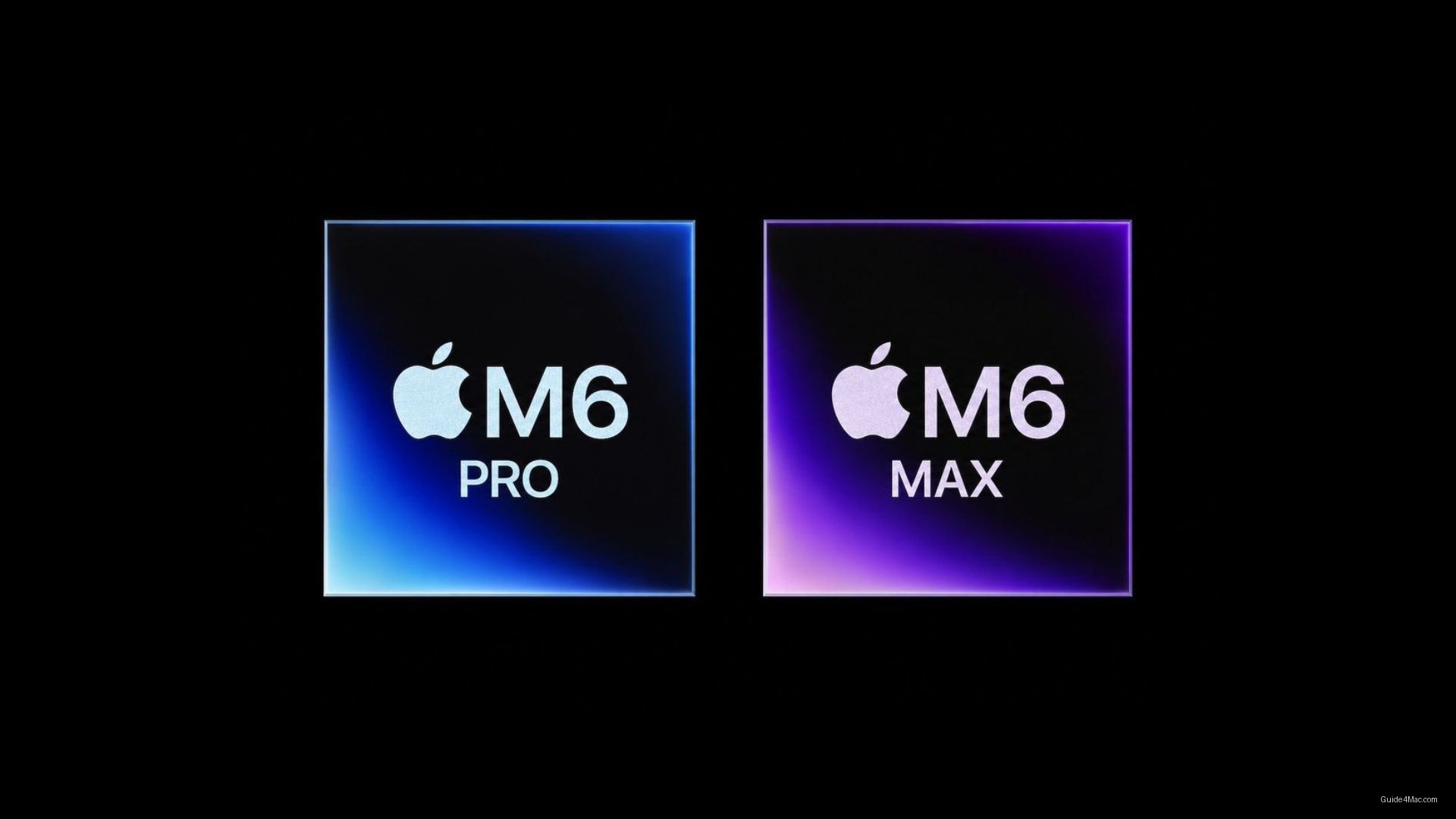
- Apple cancelled M6 Pro and M6 Max chips, shipping only base M6 before M7 in 2027.
- M6 is first Apple Silicon family without Pro, Max, or Ultra variants.
- AI performance upgrades planned for M7 prompted Apple to accelerate that generation instead.
- M7 Ultra may power Apple Intelligence servers starting 2029, positioning M7 as cloud infrastructure.
Apple’s M6 chip family is arriving incomplete by design. According to Bloomberg’s Mark Gurman, Apple has quietly cancelled the M6 Pro and M6 Max, choosing instead to ship only a base M6 before skipping ahead to the M7 generation in 2027. The reason, per Gurman, is that neural-processing upgrades planned for M7 were significant enough that Apple chose to accelerate that generation rather than fill out the usual M6 lineup. That decision makes the M6 the first Apple Silicon family to ship without Pro, Max, or Ultra variants.
The more striking framing here is not that Apple is skipping chips, but that AI priorities are now actively reshaping the release calendar. Apple has historically treated chip generations as complete product families, each with a predictable cadence across Mac tiers. Breaking that pattern mid-generation is an admission that the competitive pressure around on-device AI performance has become more urgent than the company’s own internal scheduling preferences.
Gurman reports that the M7 Ultra, planned for 2028, may eventually power Apple Intelligence servers starting in 2029. That detail suggests Apple is not just building chips for the Macs it sells today but positioning the M7 architecture as infrastructure for its own cloud AI ambitions.
A Generation That Never Completes Its Arc
Apple Silicon launched in late 2020 with the M1, followed by M1 Pro and M1 Max in late 2021 and M1 Ultra in 2022. Every generation since has followed that same pattern: a base chip for entry-level Macs, then higher-tier variants for the MacBook Pro, Mac Studio, and Mac Pro. The M6 breaks that structure entirely.
The base M6 chip still arrives on schedule, reportedly in late 2026, and will power entry-level Macs including a refreshed MacBook Pro, Mac mini, and iMac. But anyone expecting an M6 Pro MacBook Pro or an M6 Max Mac Studio will wait instead for M7 variants, which Gurman says are expected in the second half of 2027. The M5 Ultra, still planned for this year, will complete the M5 family before this gap opens up.
What Skipping Means for the Neural Engine
Apple’s Neural Engine has grown with each chip generation, but the jump from M4 to M5 was relatively modest in terms of AI-specific architecture. The M7 family, according to Gurman’s reporting, is where Apple planned its more substantial neural-processing overhaul. Deciding that those improvements were too important to delay until after a full M6 cycle suggests the gap between M6 and M7 in raw AI capability will be noticeable.
This also signals a shift in how Apple weights its chip roadmap decisions. Previously, the primary drivers were CPU and GPU performance, battery efficiency, and process node transitions. AI throughput is now apparently a factor significant enough to override the standard family-completion schedule.
The broader context is Apple’s push into on-device AI across its entire product line. Features introduced through Apple Intelligence require increasing amounts of local compute, and iOS 27 Apple Intelligence features continue to expand the demands placed on Neural Engine performance. On the iPhone side, Apple is already reportedly raising its RAM baseline to support more capable on-device models. The Mac chip strategy appears to be following the same logic, just at a larger architectural scale.
What to Do If You Are Buying a Mac in the Next Two Years
If you need a high-performance Mac in late 2026, the base M6 will be a capable chip. For most users doing everyday work, video editing, or even moderate machine learning tasks, it will be more than sufficient. The gap left by the absent M6 Pro and M6 Max does not mean those users are being abandoned.
The calculus changes if you are specifically waiting for the next MacBook Pro with a Pro or Max chip, or a Mac Studio. Those buyers are now looking at 2027 at the earliest, and potentially late 2027 if the M7 Pro and M7 Max follow the M7 base by several months. Patience here is not irrational, but the wait is longer than Apple’s prior release rhythm would have suggested.


0 Comments