M6 Pro and M6 Max Canceled, Folded Into M7 Lineup
What You Need to Know
- Apple skipping M6 Pro and M6 Max chips entirely, consolidating those tiers into M7 generation instead.
- M6 base chip arriving late 2026 with 200GB/s memory bandwidth, upgraded Neural Engine, and redesigned GPU.
- M7 Pro and M7 Max delayed to end of 2027, designed to deliver major on-device AI and GPU capabilities.
- M5 Ultra Mac Studio releasing this year with 36 CPU cores, 80 GPU cores, and 768GB unified memory support.
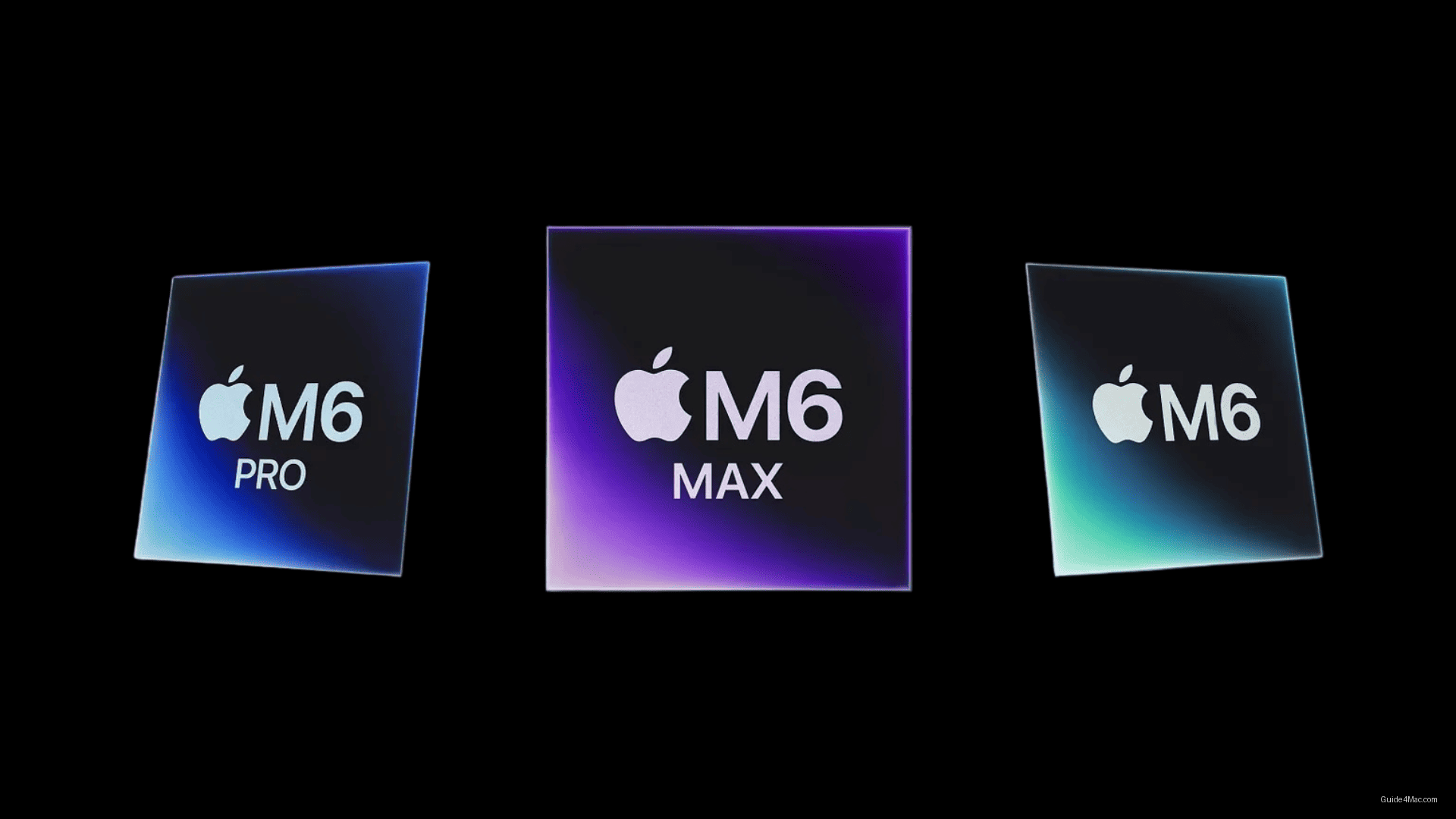
Apple’s chip roadmap is being restructured around AI, and the clearest signal is not what is coming but what is being dropped. The company plans to skip the M6 Pro and M6 Max entirely, folding those tiers into the M7 generation instead, according to Bloomberg. That makes this one of the more significant structural changes to Apple silicon since the Intel transition.
The base M6 chip still arrives on schedule, reportedly in late 2026, and will power entry-level Macs including a refreshed MacBook Pro, Mac mini, iMac, and future iPad models. Apple has tested the chip with around 200GB/s memory bandwidth, up from 153GB/s on the M5. The M6 is also expected to include an upgraded Neural Engine, a new memory architecture, better video encoding and decoding, and a redesigned GPU with up to 12 cores.
The M7 carries the heavier load
The M6 Pro and M6 Max being canceled means buyers waiting on a high-end MacBook Pro upgrade will be waiting longer than expected. Apple reportedly wants the M7 lineup to deliver its next major push for on-device AI and GPU-heavy workloads, with the base M7 targeting around 240GB/s memory bandwidth. The M7 Pro and M7 Max are slated for the end of 2027, with the M7 Ultra following in 2028.
Before any of that lands, Apple still plans to release an M5 Ultra Mac Studio as soon as this year, with around 36 CPU cores, 80 GPU cores, and support for up to 768GB of unified memory. That chip sits at the top of the current lineup and gives the Mac Studio a meaningful update while the broader roadmap shifts around it.
The acceleration toward AI-focused silicon fits a pattern Apple has been building toward, with on-device AI requirements already tied to specific chip generations. If you are tracking everything Apple has planned for 2026, the M6 entry-level refresh is still on track. The gap is at the top end, where the Pro and Max tiers will simply not exist for an entire chip generation.



0 Comments